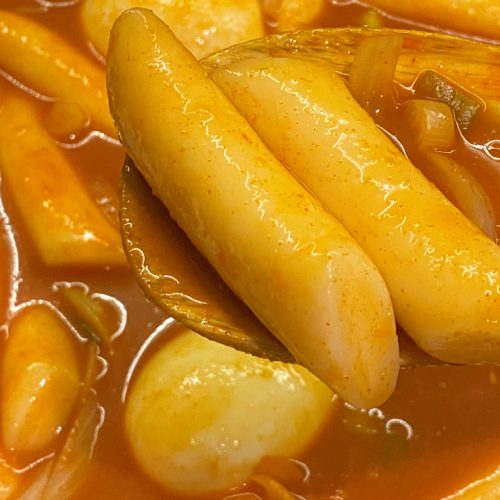
Spicy Tteokbokki (Korean Spicy Rice Cakes)
Sweet and SPICY! These wonderfully chewy rice cakes make the perfect savory snack and take less than 15 minutes to cook from start to finish.
Ingredients
Spicy Tteokbokki
- 500 grams rice cakes About 1 lb
- 2 small onions Or 1 large onion
- 2 cups water
- 2 green onions
- 2 boiled eggs
Tteokbokki Sauce
- 3 tbsp gochujang
- 3 tbsp sugar
- 1 tbsp gochugaru
- 1 tbsp garlic
- 1 tbsp soy sauce Optional but recommended
Instructions
- Boil water in a kettle. While it comes to a boil, place the rice cakes into a sieve and rinse under lukewarm running water for around a minute, making sure every rice cake gets rinsed.
- Transfer the rice cakes to a pot of boiling water and blanch for just 30 seconds. Immediately drain and rinse under cold water.
- Make tteokbokki sauce by mixing 3 tbsp gochujang + 3 tbsp sugar + 1 tbsp gochugaru + 1 tbsp garlic + 1 tbsp soy sauce in a small bowl. Set aside.
- Heat a skillet over medium heat. Add a tsp of sesame oil and the onions. Sauté for 2 minutes.
- Immediately add 2 cups of water and the rice cakes. Add the sauce and stir to mix everything together. Make sure the rice cakes are mostly submerged.
- Let it come to a boil – this should take about 5 to 7 minutes. Note: While you wait for the tteokbokki is come to a boil is the perfect time to boil the eggs, if using. Bring water to a boil and cook the eggs for 6 minutes and 30 seconds for slightly runny yolk.
- When the tteokbokki is boiling, add in the scallions and continue to cook for another 4 to 6 minutes, until the sauce is thickened and the rice cakes are soft. Remember to stir occasionally while it simmers so the rice cakes don’t stick to the bottom of the pan.
- When the sauce is looking thicker and the rice cakes are cooked, place in the boiled eggs. If you want cheese tteokbokki, this is the time to sprinkle that in.Turn off the heat. Garnish with sesame seeds, even a drizzle of sesame oil, and more scallions. Serve warm.
Notes
How do I get a thicker sauce? Mix the water and sauce together without adding the rice cakes. Let it come to a boil, simmer and reduce for 4 to 5 minutes. And then add the rice cakes.
This is how the street food trucks in Korea do it: they have the sauce on simmer all the time and add more rice cakes (and sauce ingredients) as necessary.
Do I have to soak the rice cakes? All I do is rinse and blanch. For refrigerated rice cakes, this has always been absolutely fine. But some may be hard even after the rinse, blanch, and cooking for 10 minutes. That's okay - just simmer them longer. It actually helps the sauce thicken more as the starchiness is released so it's a win win either way.
Is this gluten free?
Make it gluten-free. Pretty much everything in this recipe - rice cakes (that are made of rice, not wheat), onions, eggs, sugar, garlic, gochugaru – is naturally gluten free.
And soy sauce - you can use a gluten-free option or tamari sauce. The only thing to be careful of is the gochujang. Choose one that uses glutinous rice instead of barley malt. If you want to be absolutely safe, substitute the gochujang in this recipe with gochugaru instead. The finer the powder, the better. To make the sauce a little thicker, add 2 tablespoons of corn syrup (skip the sugar if you’re doing this).